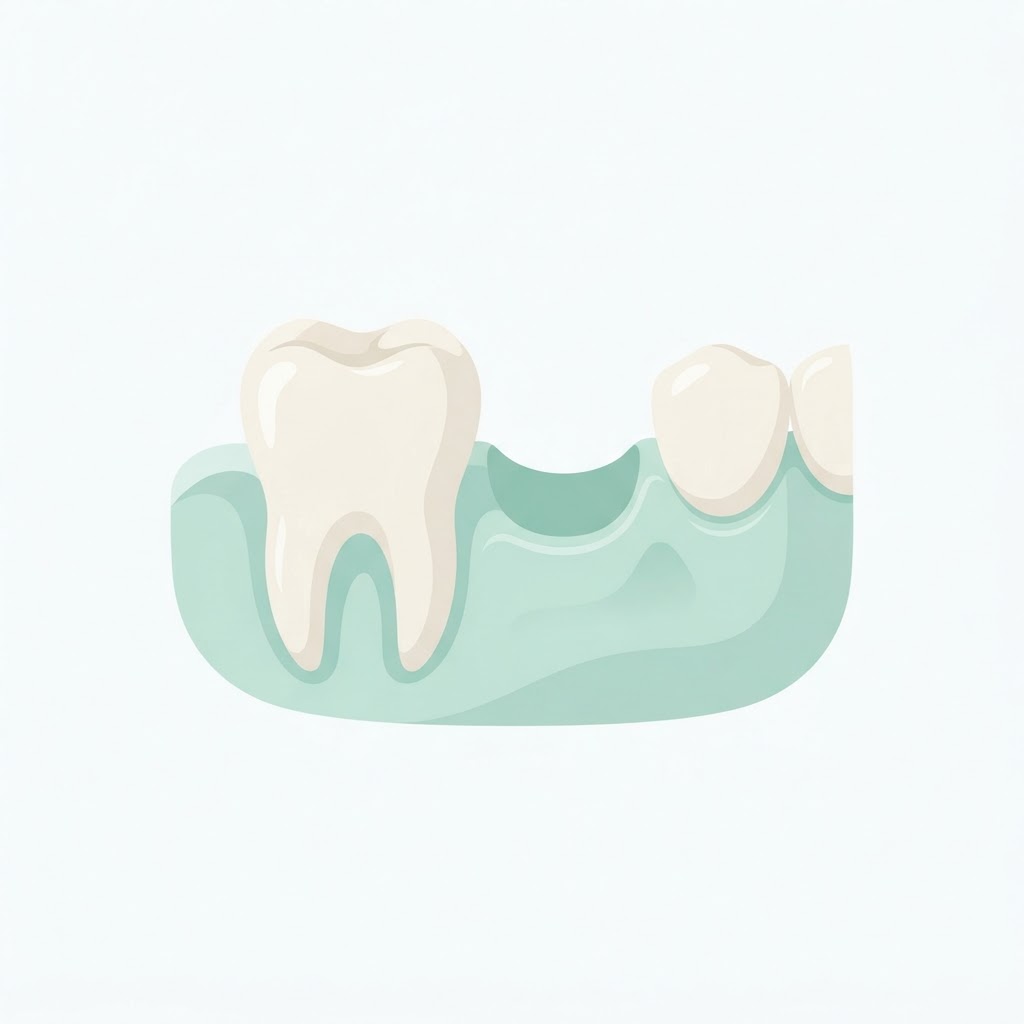
Losing a tooth can feel like a small thing, especially if it's in the back where no one sees it. Many people assume that as long as they can still chew, a missing tooth isn't a big deal. But your teeth work together as a team, and when one is lost, the rest of the mouth responds in ways you might not expect.
The truth is, a single missing tooth can set off a chain reaction that affects your bite, your jaw, your other teeth, and even your confidence. The good news is that these problems are almost entirely preventable with timely replacement.
Your Teeth Start to Shift
Your teeth rely on each other for support. Each tooth helps keep its neighbors in place. When one is removed, the teeth next to the gap begin to lean and drift toward the empty space, and the tooth above or below it may start to grow downward (or upward) into the opening because it no longer has a partner to bite against.
Over time, this shifting can lead to:
- Crowding that makes cleaning harder and increases the risk of decay
- Gaps opening up between other teeth
- Crooked teeth that change the look of your smile
- Bite misalignment that makes chewing uncomfortable
Once teeth have moved, getting them back into position is much harder than preventing the movement in the first place.
Your Bite Changes
Your bite is a carefully balanced system. Every time you close your mouth, your teeth should meet evenly. A missing tooth disrupts that balance. The surrounding teeth take on extra force, and the opposing tooth — the one that used to bite against the missing one — loses its counterpart.
This can cause:
- Uneven wear on certain teeth
- Jaw soreness or fatigue from an imbalanced bite
- Difficulty chewing on one side, which often leads people to chew only on the other — putting even more strain on those teeth
A bite that's off by even a small amount can create discomfort that builds gradually over months and years.
The Jawbone Begins to Shrink
This is one of the most important and least-discussed effects of tooth loss. Your jawbone stays strong and healthy because of the constant stimulation it receives from tooth roots when you chew and bite. When a tooth is lost, that stimulation stops.
Without that pressure, the bone in that area begins to resorb — it slowly shrinks and weakens. Over time this can:
- Change the shape of your face, causing a sunken or aged appearance
- Make nearby teeth less stable
- Reduce your options for replacement later, because there's less bone to support an implant
Bone loss happens gradually, but the longer a tooth is missing, the more bone is lost and the harder it becomes to replace the tooth ideally.
Speech and Confidence Can Be Affected
Your teeth play a role in how you form certain sounds. A missing tooth — especially toward the front — can cause a slight lisp or make certain words harder to pronounce clearly. Many people also become self-conscious about smiling, laughing, or speaking in front of others, which can affect social and professional confidence.
What About the Solutions?
The effects above are why we almost always recommend replacing a missing tooth rather than leaving the gap. Today's replacement options are comfortable, natural-looking, and designed to last:
- Dental implants replace both the root and the crown, preserving bone and keeping surrounding teeth stable. They're the closest thing to a natural tooth.
- Dental bridges anchor an artificial tooth to the teeth on either side of the gap, restoring appearance and function.
- Partial dentures are a removable option that can replace one or several missing teeth.
The right choice depends on your situation, your goals, and your budget — and we're happy to walk you through each option in plain language.
The Sooner, the Better
The biggest factor in how easily a missing tooth can be replaced is time. Replacing a tooth soon after it's lost keeps the bone healthy, prevents shifting, and gives you the widest range of treatment options. Waiting months or years can mean additional procedures — like bone grafting or orthodontics — before a replacement is even possible.
If you've lost a tooth recently, or if you've been living with a gap for a while, it's never too late to ask what your options are.
The Bottom Line
A missing tooth is more than a cosmetic concern. It can lead to shifting teeth, bite problems, bone loss, and changes to your speech and confidence — but all of these are preventable with timely replacement. If you're missing a tooth, the best next step is a conversation with your dentist about which replacement option is right for you.
Ready to restore your smile? Contact us to schedule a consultation — we'll help you understand your options with no pressure and no judgment.